Digital cards, explained
Are Digital Trading Cards Worth Anything?
In money, usually not. Only digital cards on a blockchain, such as NBA Top Shot and Sorare, can be sold for real money. Cards in an ordinary app, including Pokémon TCG Pocket, Topps BUNT, Marvel Snap and our own games, can never leave that app, so they have no cash value.
Many of them are still worth something inside the game, where other players set a price for them. That price follows the same rule as physical cards: how many copies exist.
Four kinds of digital card, and what each is worth
“Digital trading card” covers apps that work in very different ways. The question to ask is what you can do with a card once you own it.
| Kind | Examples | Sell for real money? | Where the value comes from |
|---|---|---|---|
| On a blockchain | NBA Top Shot, Sorare | Yes | An open market in real money. Worth what the next buyer pays. |
| In an app with a player market | Boxed Up, Tuned Up, Filmed Up | No | A visible price in in-game coins, set by players buying and selling. |
| In an app with trading, no prices | Topps BUNT, NBA Collect, Pokémon TCG Pocket | No | Whatever another player will swap for it. |
| In a battle game with no trading | Marvel Snap, Hearthstone, MTG Arena | No | How useful it is in your deck. No other player can get it from you. |
So the honest answer depends on the row. Only the first row turns into money. The second and third are worth something to other collectors, but only inside the game. The fourth is only worth something to you.
What about digital Pokémon cards?
This is the version of the question people ask most. Pokémon TCG Pocket cards belong to your account and cannot be sold or cashed out. Trading with other players is allowed, with limits, so a card is worth what someone will swap for it and nothing more.
Physical Pokémon cards are a separate market. They resell for real money, and set, rarity and graded condition drive the price. If that is the collection you care about, digital vs physical trading cards covers the trade-off.
What sets a digital card's price inside a game
When a game lets players set prices, you can measure what they actually pay for. We did that on our own marketplace: 668,744 player-to-player trades over 90 days, across 9,006 cards. Three findings are relevant to anyone asking what a digital card is worth.
1. Supply sets the price, and only up to a point
Below about 300 copies in circulation, each halving of a card's supply multiplied its price by roughly 5.5. Cards with 50 or fewer copies averaged about 714,000 coins a sale. Cards with 600 to 1,200 copies averaged about 1,400.
2. Above 300 copies, supply stops mattering
Past that threshold the link between supply and price disappears. With that many copies around, there is always another seller. Price falls to the fixed amount the game pays to buy a card back, which depends on its rarity tier.
3. A serial number alone does not add value
Numbered cards look like they sell for more. But when numbered and unnumbered cards with the same number of copies are compared, the numbered ones do not reliably command more. The premium belongs to scarcity, and numbered cards simply tend to be scarce.


Jordan 3 Retro Black Cat (2025)
Jordan
27 copies in circulation

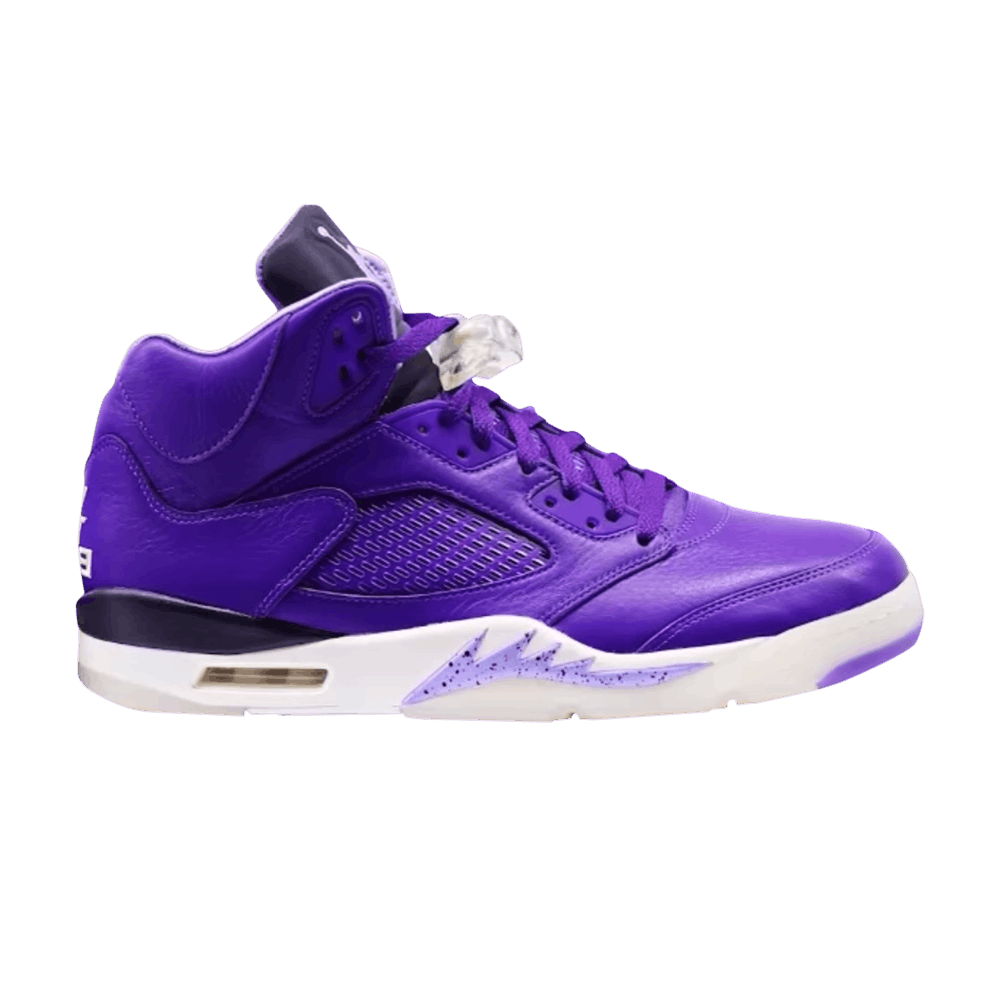
DJ Khaled x Air Jordan 5 Retro 'We The Best - Court Purple'
Jordan
788 copies in circulation
The rarity label on a card is a weak guide. A card in a high tier that has been printed thousands of times can be worth less than a lower-tier card with 40 copies. Look for how many copies exist.
How to check before you spend
- Can it leave the app? If not, treat anything you spend as buying fun, not an asset.
- Is there a market with visible prices? Without one, “value” is only what a trade partner agrees to.
- Is supply stated? A fixed, published number of copies means something. A rarity tier on its own does not.
- Are pack odds published? Both app stores require it for paid random packs. An app that hides them is telling you something.
- If it is on a blockchain, the price can fall as well as rise, and nobody is obliged to buy the card from you.
Our games are in the second row: Boxed Up (sneakers), Tuned Up (music) and Filmed Up (films). They have a player market in coins, a stated supply on limited drops and published odds. There is no blockchain, and nothing cashes out.
Questions people ask
- Are digital trading cards worth anything?
- Most cannot be sold for real money. Only cards on a blockchain — NBA Top Shot and Sorare are the best-known — can be resold for cash on an open market. Cards inside an ordinary app, such as Pokémon TCG Pocket, the Topps apps, Marvel Snap, Boxed Up, Tuned Up and Filmed Up, stay inside that app and have no cash value, though in games with a player market they still have a price in the game's own currency.
- Will digital Pokémon cards be worth anything?
- Pokémon TCG Pocket cards cannot be sold or cashed out; they belong to your account inside the app. Their value is to your own collection and, where trading is allowed, to other players. Physical Pokémon cards are a different market entirely, with real resale prices driven by set, rarity and graded condition.
- Can you sell digital trading cards for real money?
- Only if they are on a blockchain and the platform runs a real-money marketplace, as NBA Top Shot and Sorare do. Selling an in-app account or its cards for money outside the game usually breaks the app's terms of service and can get the account closed.
- What makes a digital card rare?
- Two different things that are easy to confuse. A rarity tier is a label describing how often a tier appears in packs. Supply is how many copies of one specific card actually exist. Supply is what sets the price: across 668,744 player trades in Boxed Up, cards with fewer than about 300 copies in circulation got roughly 5.5 times pricier each time supply halved, while above 300 copies supply stopped mattering at all.
- Are numbered or serial-numbered digital cards worth more?
- Not because of the number alone. In Boxed Up's trade data, capped, numbered cards were compared with uncapped cards at the same number of copies in circulation, and the numbered ones did not reliably sell for more. Numbered cards usually cost more because they are also the scarcest cards, and scarcity is what buyers are paying for.
- Are NFT trading cards a good investment?
- That is a financial question this page cannot answer for you. What is worth knowing is that a card with real resale value carries real risk: its price is whatever the next buyer will pay, and prices on blockchain card markets have moved a long way in both directions since they launched. In-app cards cannot lose you money after purchase, because they were never convertible to money in the first place.
Related questions
- What is a card collecting game? — the category, and how it differs from battle games and card scanners.
- Card collecting games without battles
- Digital vs physical trading cards